How Long Does Meal Prep Last in the Fridge? A Food-by-Food Guide
"Four days" is the answer people repeat, but it is wrong for about half of what you cook. Here are the real numbers, food by food.
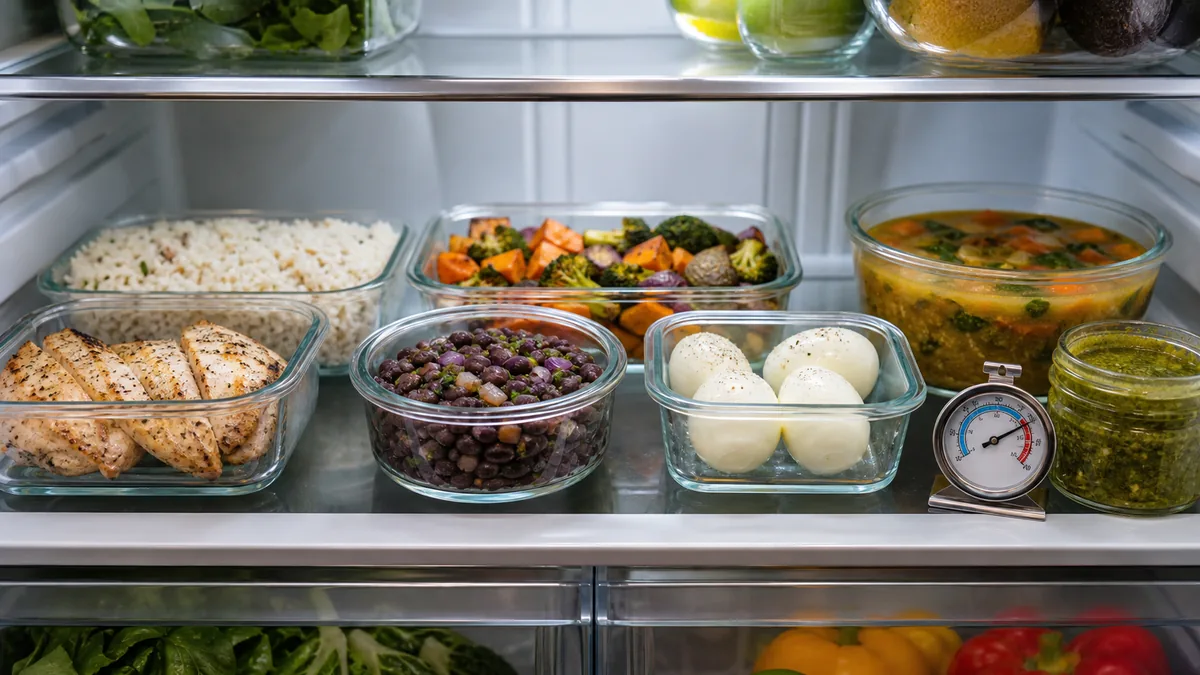
Ask the internet how long meal prep lasts and you get "three to four days" for absolutely everything, which is how people end up throwing away perfectly good soup on Wednesday and eating questionable rice on Friday.
The honest answer depends on three things: what the food is, how fast you cooled it, and how many times it has been opened. Here are the numbers we work to.
#How long does each food last in the fridge?
#How long do meat, fish and eggs keep?
The shortest windows on the list, and the ones worth being strict about.
#How long do grains, vegetables and sauces keep?
More forgiving — here the limit is usually texture rather than safety.
The numbers below line up with the USDA's own cold food storage charts; where we are stricter, it is because texture gives out before safety does.
#The full fridge and freezer storage chart
| Food | Fridge | Freezer | Notes |
|---|---|---|---|
| Cooked chicken, turkey | 3–4 days | 3 months | Dries out fast; store with a little sauce |
| Cooked beef, pork, lamb | 3–4 days | 3 months | Braises actually improve on day two |
| Cooked fish, seafood | 2 days | 2 months | The shortest window of anything here |
| Cooked rice, grains | 4 days | 1 month | Cool within one hour — see below |
| Cooked pasta (plain) | 4–5 days | 2 months | Store un-sauced |
| Roasted vegetables | 4 days | 3 months | Texture, not safety, is the limit |
| Raw chopped vegetables | 3–4 days | — | Onion and pepper leak; store separately |
| Leafy salad, undressed | 3–5 days | — | Paper towel in the box doubles this |
| Hard-boiled eggs, in shell | 7 days | — | Peeled: 3 days |
| Soups, stews, chilli | 4 days | 3 months | Freeze flat in bags to save space |
| Yoghurt-based sauces | 4–5 days | — | Splits on freezing |
| Vinaigrettes | 2 weeks | — | Fridge-cold olive oil solidifies; that is fine |
| Cooked beans, lentils | 5 days | 3 months | Store in a little of their liquid |
| Cooked tofu | 4 days | 2 months | Freezing changes texture — some people prefer it |
#Why does cooling matter more than the date on the lid?
Because the first hour after cooking decides how the next four days go. Two portions of the same chicken can spoil days apart depending entirely on what happened in the first hour.
#What is the temperature danger zone?
Bacteria multiply fastest between roughly 5°C and 60°C — 41°F to 140°F, the range the FDA Food Code calls the temperature danger zone. In the middle of it, a population of Salmonella or Staphylococcus aureus can double about every twenty minutes. Everything you do after cooking is really about getting food through that band quickly.
- −18°C / 0°F
- 5°C / 41°F
- 60°C / 140°F
- 100°C / 212°F
Cooked food should cross the orange band as fast as possible: shallow trays, lid off, and into the fridge within two hours — one hour for rice, or if the kitchen is warm. Reheat to 74°C / 165°F throughout. Ranges follow the FDA Food Code and UK Food Standards Agency guidance.
#How should you cool cooked food safely?
#How thin should you spread it?
A shallow tray cools roughly three times faster than a deep container. This is the single biggest lever you have.
#Should you put the lid on while it is hot?
Trapped steam keeps the food warm and turns roasted vegetables soggy before they reach the fridge.
#How long can cooked food sit out?
One hour if the kitchen is warm. Set a timer if you are the sort of person who wanders off.
#Can you stack hot containers?
They insulate each other and raise the temperature of everything else in the fridge.
If food sat out for four hours while you did something else, the date on the lid is meaningless. Start again.
#Why is cooked rice different from everything else?
#What makes reheated rice risky?
Spores that survive boiling, and a toxin they produce that survives reheating. Cooked rice is the one food where "it looked fine" genuinely does not help you.
Uncooked rice routinely carries Bacillus cereus spores. Spores are not bacteria — they are a dormant, armoured form, and boiling does not kill them. What kills you, mildly, is what happens next: if cooked rice sits at room temperature, those spores wake up, multiply, and produce a heat-stable emetic toxin called cereulide. Reheating destroys the bacteria. It does not destroy the toxin.
That is the entire reason "fried rice syndrome" is a phrase. It is also the reason the rice rule is one hour, not two.
#How should you store and reheat cooked rice?
#How fast does cooked rice need to cool?
Spreading rice on a tray takes thirty seconds and removes the entire problem.
#How long does cooked rice keep?
Rice is one of the few foods where we would not stretch this.
#How hot does reheated rice need to get?
Stir halfway if you are using a microwave — the cold centre is where problems live.
#Can you reheat rice more than once?
Portion rice before it goes in the fridge so you are never tempted to.
#How can you tell if meal prep has gone bad?
Smell it, look at it, touch it. Dates are a guideline; your senses override them.
#Which signs mean throw it out?
Throw it out if: it smells sour, sharp or of ammonia; there is any visible mould, including on a corner you could scrape off; the surface has gone slimy or tacky; a sauce has separated in a way it did not before; the container lid is domed.
#Which signs are only a texture problem?
It is probably fine if: roasted vegetables have gone a bit floppy, rice has gone hard and dry, or chicken has firmed up. Those are texture problems, not safety problems.
When it is genuinely borderline, throw it out. The cost of a portion of chicken is lower than the cost of a day off work.
#How do you make prepped food last longer?
#Why store sauce separately from grains?
Sauce on rice starts a clock the moment they touch. Sauce in a small pot beside the rice does not.
#Why undercook vegetables slightly?
Everything gets a second cook on reheating. Vegetables pulled slightly early are properly cooked, not mush, on day four.
#Do smaller containers really last longer?
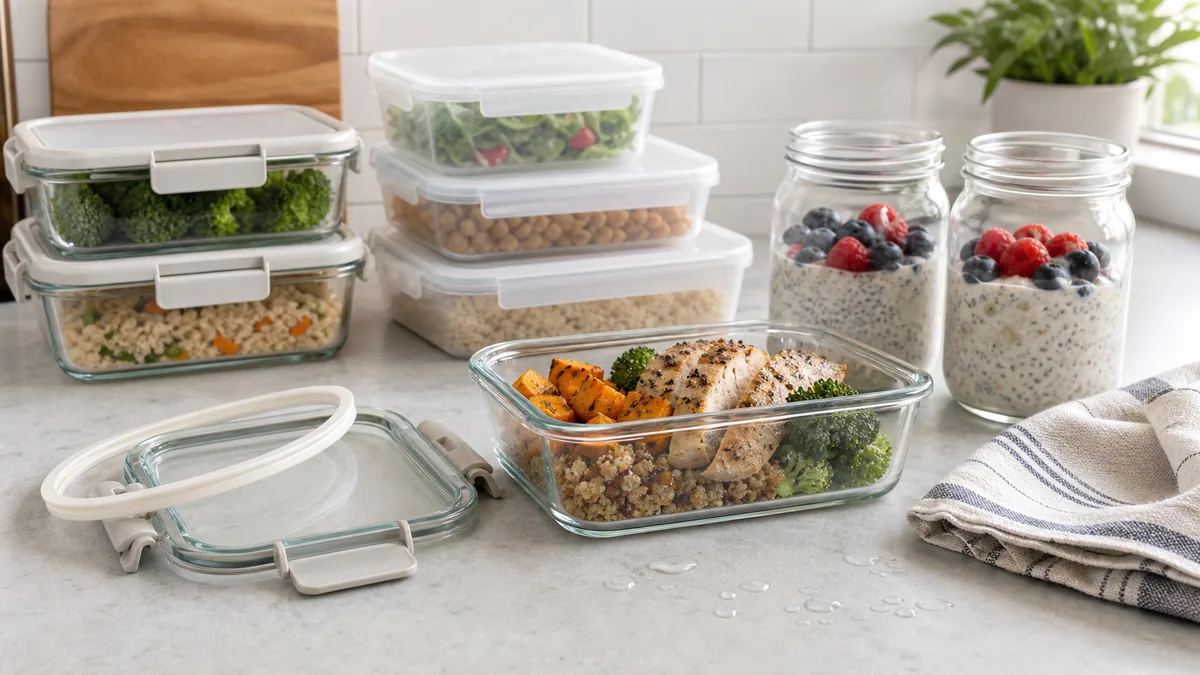
Every time you open a box you introduce warm air and bacteria from the air and your hands. Five single-portion boxes last longer than one big one you keep dipping into. Our container guide covers which sizes are worth owning.
#Should you freeze part of the batch immediately?
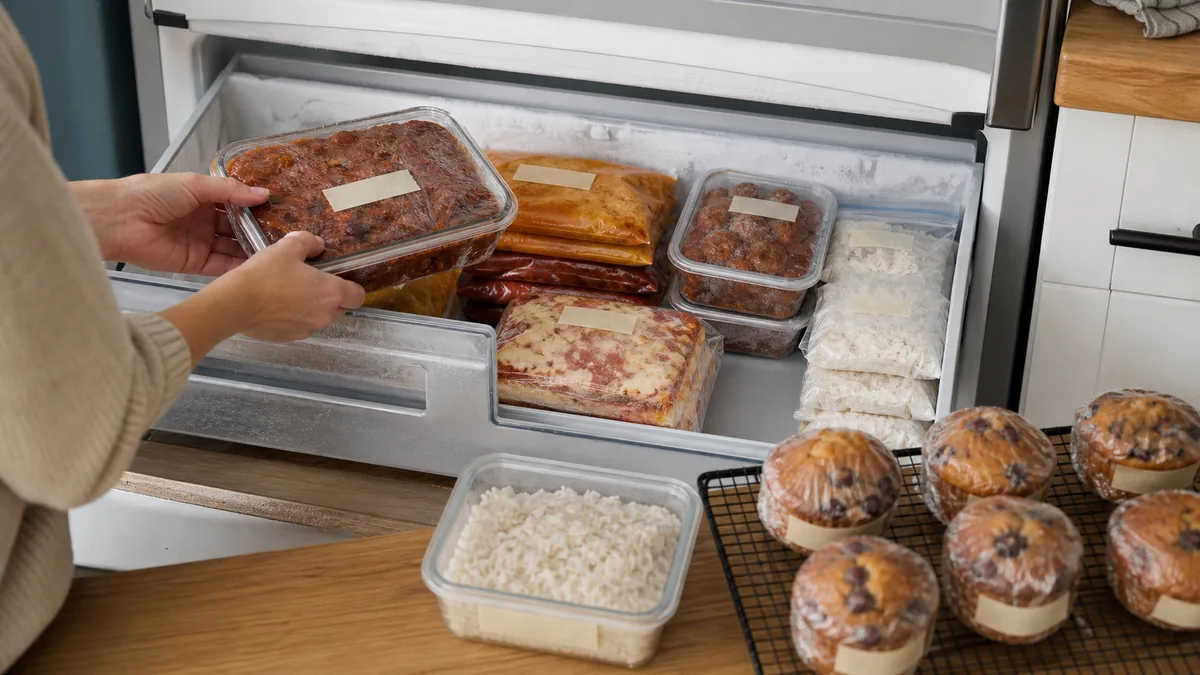
If you have prepped for five days, freeze two portions immediately. Thawed on day four, they taste like day one. This is by far the most effective trick on this list — see our freezer meals guide for what survives and what does not.
#Why is the fridge door the wrong place?
The door swings between 5°C and 10°C all day. Fine for condiments and drinks, wrong for anything cooked.
#How should you reheat prepped food?
#What temperature should reheated food reach?
Reheat to steaming hot throughout — 74°C / 165°F, which is the figure the FDA Food Code uses for reheating. In a microwave that means stirring halfway, because microwaves heat unevenly and the cold centre is where problems live.
Add a splash of water to grains and a lid to trap steam. Reheat sauces separately if you can. And reheat once only: the freeze–thaw–reheat–refrigerate–reheat cycle is where most home food poisoning actually comes from.
#The bottom line
Four days is a decent default for most cooked dishes. Fish gets two. Rice gets four but only if it was cooled fast. Soups and stews are the most forgiving thing you can prep, and dressed salads are the least.
If you want the whole system rather than the storage half of it, start with our 90-minute Sunday plan.